Back to blog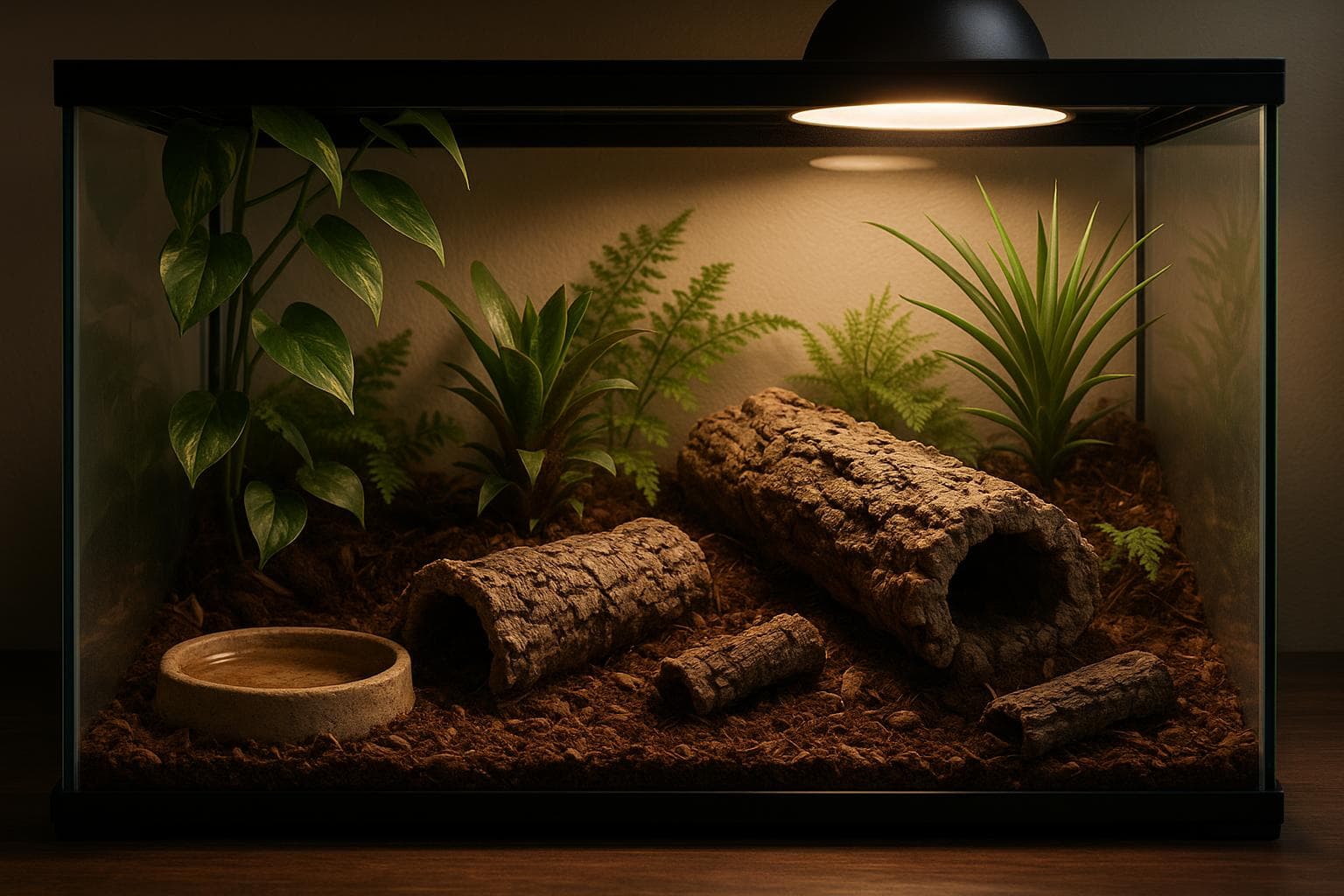
5 min read
Setting up the right enclosure before you buy
It's tempting to buy the animal first and sort the housing out afterwards. Don't. A vivarium needs time to stabilise — heating, lighting and humidity all need to settle into a reliable cycle before an animal is exposed to it, and getting that wrong in the first 48 hours is one of the most common causes of stress-related illness in newly rehomed reptiles.
Run it empty for at least a week
Set the enclosure up completely — substrate, hides, heating, lighting, water — and let it run for 5–7 days before the animal arrives. Use that week to check your thermostat actually holds the temperature it claims to, rather than trusting the dial.
Take readings at both the basking spot and the cool end with a proper digital probe thermometer, not a stick-on strip. Check morning and evening, since ambient room temperature swings can shift the whole gradient more than you'd expect.
Match the setup to the species, not the enclosure you already own
A setup that's perfect for a corn snake will not work for a bearded dragon, and vice versa. Before you buy anything, confirm the exact temperature gradient, humidity range, UVB requirement and minimum enclosure size for the specific species — and specific life stage — you're planning to keep.
Ask the seller directly what they currently house the animal in. If your planned setup is smaller or less capable than theirs, that's a sign you need to upgrade before bringing the animal home, not after.
Have a backup plan for heating
Thermostats and heat sources fail. Know in advance what you'll do if a heat mat or bulb dies overnight — a spare bulb, a spare thermostat, or at minimum a plan for keeping the animal warm for 24 hours while you source a replacement.